April 2022 - Podcast

Friday, April 29, 2022

A one-up on motion capture
April 29, 20220 Comments

From “Star Wars” to “Happy Feet,” many beloved films contain scenes that were made possible by motion capture technology, which records movement of objects or people through video. Further, applications for this tracking, which involve complicated interactions between physics, geometry, and perception, extend beyond Hollywood to the military, sports training, medical fields, and computer vision and robotics, allowing engineers to understand and simulate action happening within real-world environments.

As this can be a complex and costly process — often requiring markers placed on objects or people and recording the action sequence — researchers are working to shift the burden to neural networks, which could acquire this data from a simple video and reproduce it in a model. Work in physics simulations and rendering shows promise to make this more widely used, since it can characterize realistic, continuous, dynamic motion from images and transform back and forth between a 2D render and 3D scene in the world. However, to do so, current techniques require precise knowledge of the environmental conditions where the action is taking place, and the choice of renderer, both of which are often unavailable.

Now, a team of researchers from MIT and IBM has developed a trained neural network pipeline that avoids this issue, with the ability to infer the state of the environment and the actions happening, the physical characteristics of the object or person of interest (system), and its control parameters. When tested, the technique can outperform other methods in simulations of four physical systems of rigid and deformable bodies, which illustrate different types of dynamics and interactions, under various environmental conditions. Further, the methodology allows for imitation learning — predicting and reproducing the trajectory of a real-world, flying quadrotor from a video.

“The high-level research problem this paper deals with is how to reconstruct a digital twin from a video of a dynamic system,” says Tao Du PhD ’21, a postdoc in the Department of Electrical Engineering and Computer Science (EECS), a member of Computer Science and Artificial Intelligence Laboratory (CSAIL), and a member of the research team. In order to do this, Du says, “we need to ignore the rendering variances from the video clips and try to grasp of the core information about the dynamic system or the dynamic motion.”

Du’s co-authors include lead author Pingchuan Ma, a graduate student in EECS and a member of CSAIL; Josh Tenenbaum, the Paul E. Newton Career Development Professor of Cognitive Science and Computation in the Department of Brain and Cognitive Sciences and a member of CSAIL; Wojciech Matusik, professor of electrical engineering and computer science and CSAIL member; and MIT-IBM Watson AI Lab principal research staff member Chuang Gan. This work was presented this week the International Conference on Learning Representations.

While capturing videos of characters, robots, or dynamic systems to infer dynamic movement makes this information more accessible, it also brings a new challenge. “The images or videos [and how they are rendered] depend largely on the on the lighting conditions, on the background info, on the texture information, on the material information of your environment, and these are not necessarily measurable in a real-world scenario,” says Du. Without this rendering configuration information or knowledge of which renderer is used, it’s presently difficult to glean dynamic information and predict behavior of the subject of the video. Even if the renderer is known, current neural network approaches still require large sets of training data. However, with their new approach, this can become a moot point. “If you take a video of a leopard running in the morning and in the evening, of course, you’ll get visually different video clips because the lighting conditions are quite different. But what you really care about is the dynamic motion: the joint angles of the leopard — not if they look light or dark,” Du says.

In order to take rendering domains and image differences out of the issue, the team developed a pipeline system containing a neural network, dubbed “rendering invariant state-prediction (RISP)” network. RISP transforms differences in images (pixels) to differences in states of the system — i.e., the environment of action — making their method generalizable and agnostic to rendering configurations. RISP is trained using random rendering parameters and states, which are fed into a differentiable renderer, a type of renderer that measures the sensitivity of pixels with respect to rendering configurations, e.g., lighting or material colors. This generates a set of varied images and video from known ground-truth parameters, which will later allow RISP to reverse that process, predicting the environment state from the input video. The team additionally minimized RISP’s rendering gradients, so that its predictions were less sensitive to changes in rendering configurations, allowing it to learn to forget about visual appearances and focus on learning dynamical states. This is made possible by a differentiable renderer.

The method then uses two similar pipelines, run in parallel. One is for the source domain, with known variables. Here, system parameters and actions are entered into a differentiable simulation. The generated simulation’s states are combined with different rendering configurations into a differentiable renderer to generate images, which are fed into RISP. RISP then outputs predictions about the environmental states. At the same time, a similar target domain pipeline is run with unknown variables. RISP in this pipeline is fed these output images, generating a predicted state. When the predicted states from the source and target domains are compared, a new loss is produced; this difference is used to adjust and optimize some of the parameters in the source domain pipeline. This process can then be iterated on, further reducing the loss between the pipelines.

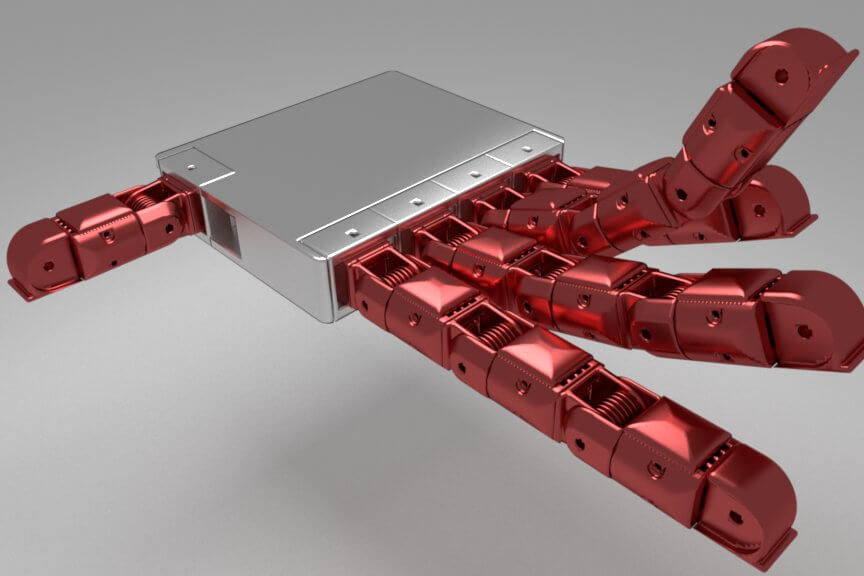
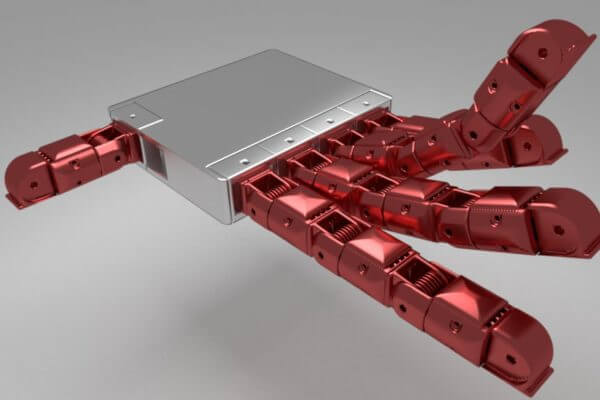
To determine the success of their method, the team tested it in four simulated systems: a quadrotor (a flying rigid body that doesn’t have any physical contact), a cube (a rigid body that interacts with its environment, like a die), an articulated hand, and a rod (deformable body that can move like a snake). The tasks included estimating the state of a system from an image, identifying the system parameters and action control signals from a video, and discovering the control signals from a target image that direct the system to the desired state. Additionally, they created baselines and an oracle, comparing the novel RISP process in these systems to similar methods that, for example, lack the rendering gradient loss, don’t train a neural network with any loss, or lack the RISP neural network altogether. The team also looked at how the gradient loss impacted the state prediction model’s performance over time. Finally, the researchers deployed their RISP system to infer the motion of a real-world quadrotor, which has complex dynamics, from video. They compared the performance to other techniques that lacked a loss function and used pixel differences, or one that included manual tuning of a renderer’s configuration.

In nearly all of the experiments, the RISP procedure outperformed similar or the state-of-the-art methods available, imitating or reproducing the desired parameters or motion, and proving to be a data-efficient and generalizable competitor to current motion capture approaches.

For this work, the researchers made two important assumptions: that information about the camera is known, such as its position and settings, as well as the geometry and physics governing the object or person that is being tracked. Future work is planned to address this.

“I think the biggest problem we’re solving here is to reconstruct the information in one domain to another, without very expensive equipment,” says Ma. Such an approach should be “useful for [applications such as the] metaverse, which aims to reconstruct the physical world in a virtual environment,” adds Gan. “It is basically an everyday, available solution, that’s neat and simple, to cross domain reconstruction or the inverse dynamics problem,” says Ma.

This research was supported, in part, by the MIT-IBM Watson AI Lab, Nexplore, DARPA Machine Common Sense program, Office of Naval Research (ONR), ONR MURI, and Mitsubishi Electric.


from ScienceBlog.com https://ift.tt/2jBOlby
via
Read more
Unlocking a cure for carbon monoxide poisoning

Thursday, April 28, 2022

Fifteen-Year Project Quantifies Threat to Reptiles
Cancer Cells Break Own DNA to Defend Against Radiation
April 28, 20220 Comments
Self-inflicted DNA breaks let the cells hit pause on repair of radiation-induced DNA damage, giving them time to recover, an in vitro study shows.

from The Scientist RSS https://ift.tt/B6VNy17
via
Read more
Dopamine Drives Bee Desires: Study
April 28, 20220 Comments
Like in humans, the neurotransmitter appears to play a role in generating wanting-like behavior and, perhaps, happy memories in honeybees.

from The Scientist RSS https://ift.tt/iflVU1W
via
Read more

Wednesday, April 27, 2022

Machine learning, harnessed to extreme computing, aids fusion energy development
April 27, 20220 Comments

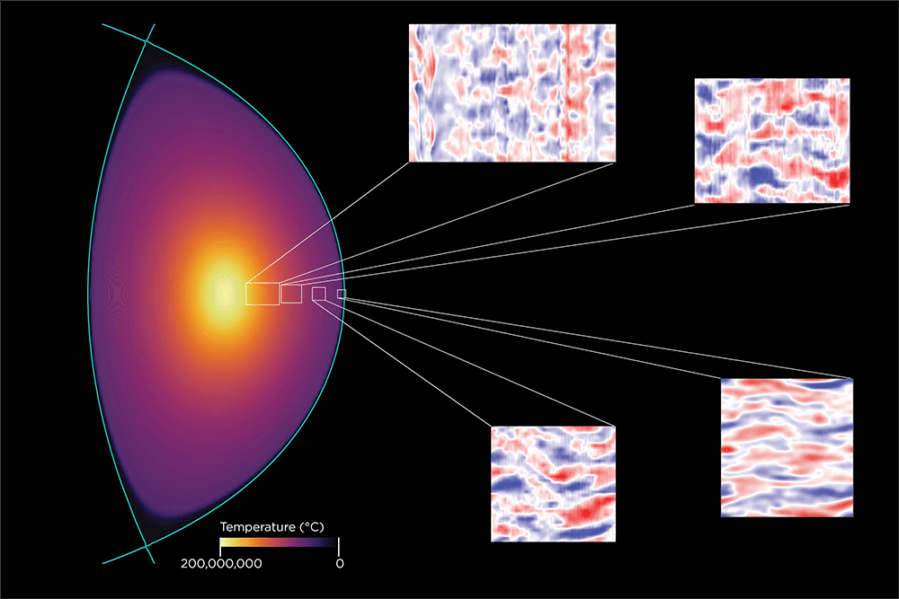
MIT research scientists Pablo Rodriguez-Fernandez and Nathan Howard have just completed one of the most demanding calculations in fusion science — predicting the temperature and density profiles of a magnetically confined plasma via first-principles simulation of plasma turbulence. Solving this problem by brute force is beyond the capabilities of even the most advanced supercomputers. Instead, the researchers used an optimization methodology developed for machine learning to dramatically reduce the CPU time required while maintaining the accuracy of the solution.

Fusion energy

Fusion offers the promise of unlimited, carbon-free energy through the same physical process that powers the sun and the stars. It requires heating the fuel to temperatures above 100 million degrees, well above the point where the electrons are stripped from their atoms, creating a form of matter called plasma. On Earth, researchers use strong magnetic fields to isolate and insulate the hot plasma from ordinary matter. The stronger the magnetic field, the better the quality of the insulation that it provides.

Rodriguez-Fernandez and Howard have focused on predicting the performance expected in the SPARC device, a compact, high-magnetic-field fusion experiment, currently under construction by the MIT spin-out company Commonwealth Fusion Systems (CFS) and researchers from MIT’s Plasma Science and Fusion Center. While the calculation required an extraordinary amount of computer time, over 8 million CPU-hours, what was remarkable was not how much time was used, but how little, given the daunting computational challenge.

The computational challenge of fusion energy

Turbulence, which is the mechanism for most of the heat loss in a confined plasma, is one of the science’s grand challenges and the greatest problem remaining in classical physics. The equations that govern fusion plasmas are well known, but analytic solutions are not possible in the regimes of interest, where nonlinearities are important and solutions encompass an enormous range of spatial and temporal scales. Scientists resort to solving the equations by numerical simulation on computers. It is no accident that fusion researchers have been pioneers in computational physics for the last 50 years.

One of the fundamental problems for researchers is reliably predicting plasma temperature and density given only the magnetic field configuration and the externally applied input power. In confinement devices like SPARC, the external power and the heat input from the fusion process are lost through turbulence in the plasma. The turbulence itself is driven by the difference in the extremely high temperature of the plasma core and the relatively cool temperatures of the plasma edge (merely a few million degrees). Predicting the performance of a self-heated fusion plasma therefore requires a calculation of the power balance between the fusion power input and the losses due to turbulence.

These calculations generally start by assuming plasma temperature and density profiles at a particular location, then computing the heat transported locally by turbulence. However, a useful prediction requires a self-consistent calculation of the profiles across the entire plasma, which includes both the heat input and turbulent losses. Directly solving this problem is beyond the capabilities of any existing computer, so researchers have developed an approach that stitches the profiles together from a series of demanding but tractable local calculations. This method works, but since the heat and particle fluxes depend on multiple parameters, the calculations can be very slow to converge.

However, techniques emerging from the field of machine learning are well suited to optimize just such a calculation. Starting with a set of computationally intensive local calculations run with the full-physics, first-principles CGYRO code (provided by a team from General Atomics led by Jeff Candy) Rodriguez-Fernandez and Howard fit a surrogate mathematical model, which was used to explore and optimize a search within the parameter space. The results of the optimization were compared to the exact calculations at each optimum point, and the system was iterated to a desired level of accuracy. The researchers estimate that the technique reduced the number of runs of the CGYRO code by a factor of four.

New approach increases confidence in predictions

This work, described in a recent publication in the journal Nuclear Fusion, is the highest fidelity calculation ever made of the core of a fusion plasma. It refines and confirms predictions made with less demanding models. Professor Jonathan Citrin, of the Eindhoven University of Technology and leader of the fusion modeling group for DIFFER, the Dutch Institute for Fundamental Energy Research, commented: “The work significantly accelerates our capabilities in more routinely performing ultra-high-fidelity tokamak scenario prediction. This algorithm can help provide the ultimate validation test of machine design or scenario optimization carried out with faster, more reduced modeling, greatly increasing our confidence in the outcomes.” 

In addition to increasing confidence in the fusion performance of the SPARC experiment, this technique provides a roadmap to check and calibrate reduced physics models, which run with a small fraction of the computational power. Such models, cross-checked against the results generated from turbulence simulations, will provide a reliable prediction before each SPARC discharge, helping to guide experimental campaigns and improving the scientific exploitation of the device. It can also be used to tweak and improve even simple data-driven models, which run extremely quickly, allowing researchers to sift through enormous parameter ranges to narrow down possible experiments or possible future machines.

The research was funded by CFS, with computational support from the National Energy Research Scientific Computing Center, a U.S. Department of Energy Office of Science User Facility.


from ScienceBlog.com https://ift.tt/Mw5GY4D
via
Read more
How to improve your memory

Monday, April 25, 2022

Controlling heat flow in a solid by switching crystal structure dimensionality
Sunspot sends off double flare, as solar activity ramps up
New research provides better understanding of skin's durability
Predicting distribution of phosphoric acid and water in high-temperature polymer electrolyte membrane fuel cell
Human 'hobbit' ancestor may be hiding in Indonesia, new controversial book claims
An easier way to teach robots new skills
April 25, 20220 Comments

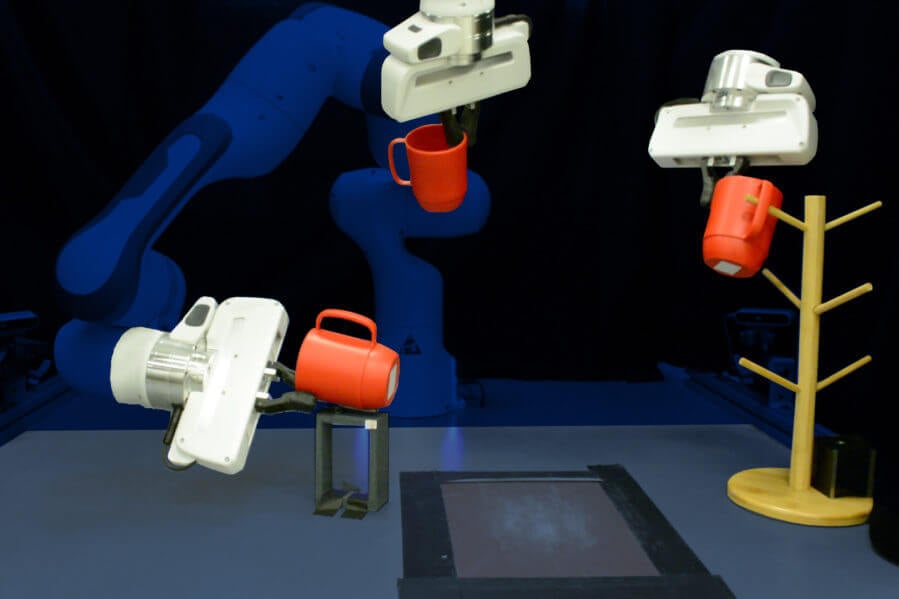
With e-commerce orders pouring in, a warehouse robot picks mugs off a shelf and places them into boxes for shipping. Everything is humming along, until the warehouse processes a change and the robot must now grasp taller, narrower mugs that are stored upside down.

Reprogramming that robot involves hand-labeling thousands of images that show it how to grasp these new mugs, then training the system all over again.

But a new technique developed by MIT researchers would require only a handful of human demonstrations to reprogram the robot. This machine-learning method enables a robot to pick up and place never-before-seen objects that are in random poses it has never encountered. Within 10 to 15 minutes, the robot would be ready to perform a new pick-and-place task.

The technique uses a neural network specifically designed to reconstruct the shapes of 3D objects. With just a few demonstrations, the system uses what the neural network has learned about 3D geometry to grasp new objects that are similar to those in the demos.

In simulations and using a real robotic arm, the researchers show that their system can effectively manipulate never-before-seen mugs, bowls, and bottles, arranged in random poses, using only 10 demonstrations to teach the robot.

“Our major contribution is the general ability to much more efficiently provide new skills to robots that need to operate in more unstructured environments where there could be a lot of variability. The concept of generalization by construction is a fascinating capability because this problem is typically so much harder,” says Anthony Simeonov, a graduate student in electrical engineering and computer science (EECS) and co-lead author of the paper.

Simeonov wrote the paper with co-lead author Yilun Du, an EECS graduate student; Andrea Tagliasacchi, a staff research scientist at Google Brain; Joshua B. Tenenbaum, the Paul E. Newton Career Development Professor of Cognitive Science and Computation in the Department of Brain and Cognitive Sciences and a member of the Computer Science and Artificial Intelligence Laboratory (CSAIL); Alberto Rodriguez, the Class of 1957 Associate Professor in the Department of Mechanical Engineering; and senior authors Pulkit Agrawal, a professor in CSAIL, and Vincent Sitzmann, an incoming assistant professor in EECS. The research will be presented at the International Conference on Robotics and Automation.

Grasping geometry

A robot may be trained to pick up a specific item, but if that object is lying on its side (perhaps it fell over), the robot sees this as a completely new scenario. This is one reason it is so hard for machine-learning systems to generalize to new object orientations.

To overcome this challenge, the researchers created a new type of neural network model, a Neural Descriptor Field (NDF), that learns the 3D geometry of a class of items. The model computes the geometric representation for a specific item using a 3D point cloud, which is a set of data points or coordinates in three dimensions. The data points can be obtained from a depth camera that provides information on the distance between the object and a viewpoint. While the network was trained in simulation on a large dataset of synthetic 3D shapes, it can be directly applied to objects in the real world.

The team designed the NDF with a property known as equivariance. With this property, if the model is shown an image of an upright mug, and then shown an image of the same mug on its side, it understands that the second mug is the same object, just rotated.

“This equivariance is what allows us to much more effectively handle cases where the object you observe is in some arbitrary orientation,” Simeonov says.

As the NDF learns to reconstruct shapes of similar objects, it also learns to associate related parts of those objects. For instance, it learns that the handles of mugs are similar, even if some mugs are taller or wider than others, or have smaller or longer handles.

“If you wanted to do this with another approach, you’d have to hand-label all the parts. Instead, our approach automatically discovers these parts from the shape reconstruction,” Du says.

The researchers use this trained NDF model to teach a robot a new skill with only a few physical examples. They move the hand of the robot onto the part of an object they want it to grip, like the rim of a bowl or the handle of a mug, and record the locations of the fingertips.

Because the NDF has learned so much about 3D geometry and how to reconstruct shapes, it can infer the structure of a new shape, which enables the system to transfer the demonstrations to new objects in arbitrary poses, Du explains.

Picking a winner

They tested their model in simulations and on a real robotic arm using mugs, bowls, and bottles as objects. Their method had a success rate of 85 percent on pick-and-place tasks with new objects in new orientations, while the best baseline was only able to achieve a success rate of 45 percent. Success means grasping a new object and placing it on a target location, like hanging mugs on a rack.

Many baselines use 2D image information rather than 3D geometry, which makes it more difficult for these methods to integrate equivariance. This is one reason the NDF technique performed so much better.

While the researchers were happy with its performance, their method only works for the particular object category on which it is trained. A robot taught to pick up mugs won’t be able to pick up boxes or headphones, since these objects have geometric features that are too different than what the network was trained on.

“In the future, scaling it up to many categories or completely letting go of the notion of category altogether would be ideal,” Simeonov says.

They also plan to adapt the system for nonrigid objects and, in the longer term, enable the system to perform pick-and-place tasks when the target area changes.

This work is supported, in part, by the Defense Advanced Research Projects Agency, the Singapore Defense Science and Technology Agency, and the National Science Foundation.


from ScienceBlog.com https://ift.tt/HCe9UaD
via
Read more

Friday, April 22, 2022

Study Nearly Doubles Known Cancer-Linked Mutational Signatures
April 22, 20220 Comments
Analyzing the whole genome sequences of more than 18,000 tumors, researchers catalog nearly 60 new patterns of mutations that could inform cancer treatment.

from The Scientist RSS https://ift.tt/yW5n4uA
via
Read more
Science Snapshot: Globetrotting Sandstorms
Cretaceous dinosaurs come to life in stunning footage from 'Prehistoric Planet'
Longest COVID-19 infection reported: Patient had virus for 505 days.

Thursday, April 21, 2022

A community approach to improving the health of the planet
April 21, 20220 Comments

Earlier this month, MIT’s Department of Mechanical Engineering (MechE) hosted a Health of the Planet Showcase. The event was the culmination of a four-year long community initiative to focus on what the mechanical engineering community at MIT can do to solve some of the biggest challenges the planet faces on a local and global scale. Structured like an informal poster session, the event marked the first time that administrative staff joined students, researchers, and postdocs in sharing their own research.

When Evelyn Wang started her tenure as mechanical engineering department head in July 2018, she and associate department heads Pierre Lermusiaux and Rohit Karnik made the health of the planet a top priority for the department. Their goal was to bring students, faculty, and staff together to develop solutions that address the many problems related to the health of the planet.

“As a field, mechanical engineering is unique in its diversity,” says Wang, the Ford Professor of Engineering. “We have researchers who are world-leading experts on desalination, ocean engineering, energy storage, and photovoltaics, just to name a few. One of our driving motivations has been getting those experts to collaborate and work on new health of the planet research projects together.”

Wang also saw an opportunity to tap into the passions of the department’s students and staff, many of whom devote their extracurricular and personal time to environmental causes. She enlisted the help of a team of faculty and staff to launch what has become known as the MechE Health of the Planet Initiative.

The initiative, which capitalizes on the diverse range of research fields in mechanical engineering, encouraged both grand research ideas that could have impact on a global scale, and smaller personal habits that could help on a smaller scale.

“We wanted to encourage everyone in our community to think about their daily routine and make small changes that really add up over time,” says Dorothy Hanna, program administrator at MIT and one of the staff members leading the initiative.

The Health of the Planet team started small. They hosted an office supply swap day to encourage recycling and reuse of everyday office products. This idea expanded to include the launch of “Lab Reuse Days.” Members of the Rohsenow Kendall Lab, including members of the research groups of professors Gang Chen, John Lienhard, and Evelyn Wang, gathered extra materials for reuse. Researchers from other labs picked up Arduino kits, tubing, and electrical wiring to use for their own projects.

While individuals were encouraged to adopt small habits at home and at work to help the health of the planet, research teams were encouraged to work together on solutions on a larger scale.

Seed funding for collaborative research

In early 2020, the MIT Department of Mechanical Engineering launched a new collaborative seed research program based on funding from MathWorks, the computing software company that developed MATLAB. The first seed funding supported health of the planet research projects led by two or more mechanical engineering faculty members.

“One of the driving goals of MechE has been fostering collaborations and supporting interdisciplinary research on the grand challenges our world faces,” says Pierre Lermusiaux, the Nam P. Suh Professor and associate department head for operations. “The seed funding from MathWorks was a great opportunity to build upon the diverse expertise and creativity our researchers have to address health of the planet related issues.” 

The research projects supported by the seed funding ranged from lithium-ion batteries for electric vehicles to high-performance household energy products for low- and middle-income countries. Each project differs in scope and application, and draws upon the expertise of at least two different research groups at MIT.

Throughout the past two years, faculty presented about these research projects in several community seminars. They also participated in a full-day faculty research retreat focused on health of the planet research that included presentations from local Cambridge and Boston city leaders, as well as experts from other MIT departments and Harvard University.

These projects have helped break down barriers and increased collaboration among research groups that focus on different areas. The third round of seed funding for collaborative research projects was recently announced and new projects will be chosen in the coming weeks.

A community showcase

Upon returning to the campus last fall, the Health of the Planet team began planning an event to bring the community together and celebrate the department’s research efforts. The Health of the Planet Showcase, which took place on April 4, featured 26 presenters from across the mechanical engineering community at MIT.

Projects included a marine coastal monitoring robot, solar hydrogen production with thermochemical cycles, and a portable atmospheric water extractor for dry climates. Among the presenters was Administrative Assistant Tony Pulsone, who presented on how honeybees navigate their surroundings, as well as program manager Theresa Werth and program administrator Dorothy Hanna, who presented on reducing bottled water use and practical strategies developed by staff to overcome functional barriers on campus.

The event concluded with the announcement of the Fay and Alfred D. Chandler Jr. Research Fellowship, awarded to a MechE student-led effort to propose a new paradigm to improve the health of our planet. Graduate student Charlene Xia won for her work developing a real-time opto-fluidics system for monitoring the soil microbiome.

“The soil microbiome governs the biogeochemical cycling of macronutrients, micronutrients, and other elements vital for the growth of plants and animal life,” Xia said. “Understanding and predicting the impact of climate change on soil microbiomes and the ecosystem services they provide present a grand challenge and major opportunity.”

The Chandler Fellowship will continue during the 2022-23 academic year, when another student-led project will be chosen. The department also hopes to make the Health of the Planet Showcase an annual gathering.

“The showcase was such a vibrant event,” adds Wang. “It really energized the department and renewed our commitment to growing community efforts and continuing to advance research to help improve and protect the health of our planet.”


from ScienceBlog.com https://ift.tt/ZMhqyd6
via
Read more
Grape-Doling Tourists Gave Endangered Iguanas High Blood Sugar
April 21, 20220 Comments
Research finds that a high-sugar diet supplied by tourists is giving Bahamian rock iguanas the lizard equivalent of high blood sugar.

from The Scientist RSS https://ift.tt/c3Lr6Mu
via
Read more
Cluster of hepatitis cases in US children may be tied to common virus
Woman's sudden dizziness and hearing loss had a rare cause

Wednesday, April 20, 2022

This Fungus Has More Than 17,000 Sexes
April 20, 20220 Comments
Advances in sequencing technologies have finally allowed researchers to zero in on the genetic diversity underlying the incredible mating system of shelf fungi.

from The Scientist RSS https://ift.tt/JIenkfC
via
Read more
Fruit Bats Echolocate During the Day Despite Having Great Vision
April 20, 20220 Comments
Contrary to what researchers had assumed, Egyptian fruit bats don’t rely solely on sight to orient themselves as they drink and forage for food in daylight. 

from The Scientist RSS https://ift.tt/2MlbQTN
via
Read more

Tuesday, April 19, 2022

How Do Storage Conditions Alter Single Cell Gene Expression Data Quality?
April 19, 20220 Comments
Scientists profiled whole blood samples to find the ideal storage environment for downstream single cell analyses.

from The Scientist RSS https://ift.tt/1nSTzGZ
via
Read more
Science Snapshot: Not "Extinctus" After All
April 19, 20220 Comments
Assumed to have gone extinct more than 30 years ago, Gasteranthus extinctus has been rediscovered by scientists working in Ecuador.

from The Scientist RSS https://ift.tt/17GuNh3
via
Read more
Correct running foot placement: how to achieve the perfect form
Why was NASA's 'Mega Moon Rocket' test delayed (again)?

Sunday, April 17, 2022

Infographic: How the Body's Defenses Attack the Brain
April 17, 20220 Comments
Scientists have pinpointed several pathways through which the immune system could disrupt neuronal functioning and thereby lead to psychotic symptoms.

from The Scientist RSS https://ift.tt/jPuSwQ3
via
Read more
CRACK Method Reveals Novel Neuron Type in Mouse Brain
April 17, 20220 Comments
A new technique reveals cells’ precise locations and functions in the brain. Its developers have already used it to identify a previously unknown neuron type.

from The Scientist RSS https://ift.tt/arYDvu8
via
Read more
Infographic: Simultaneously Studying Neuron Structure and Function
April 17, 20220 Comments
A new methodology combines existing techniques to reveal the specific function and location of multiple types of neurons at once.

from The Scientist RSS https://ift.tt/cyuW8Sr
via
Read more
Opinion: Another Species of Hominin May Still Be Alive
April 17, 20220 Comments
Do members of Homo floresiensis still inhabit the Indonesian island where their fossils helped identify a new human species fewer than 20 years ago?

from The Scientist RSS https://ift.tt/P0qxcY7
via
Read more
Caught on Camera

Friday, April 15, 2022

A flexible way to grab items with feeling
April 15, 20220 Comments

The notion of a large metallic robot that speaks in monotone and moves in lumbering, deliberate steps is somewhat hard to shake. But practitioners in the field of soft robotics have an entirely different image in mind — autonomous devices composed of compliant parts that are gentle to the touch, more closely resembling human fingers than R2-D2 or Robby the Robot.

That model is now being pursued by Professor Edward Adelson and his Perceptual Science Group at MIT’s Computer Science and Artificial Intelligence Laboratory (CSAIL). In a recent project, Adelson and Sandra Liu — a mechanical engineering PhD student at CSAIL — have developed a robotic gripper using novel “GelSight Fin Ray” fingers that, like the human hand, is supple enough to manipulate objects. What sets this work apart from other efforts in the field is that Liu and Adelson have endowed their gripper with touch sensors that can meet or exceed the sensitivity of human skin.

Their work was presented last week at the 2022 IEEE 5th International Conference on Soft Robotics.

The fin ray has become a popular item in soft robotics owing to a discovery made in 1997 by the German biologist Leif Kniese. He noticed that when he pushed against a fish’s tail with his finger, the ray would bend toward the applied force, almost embracing his finger, rather than tilting away. The design has become popular, but it lacks tactile sensitivity. “It’s versatile because it can passively adapt to different shapes and therefore grasp a variety of objects,” Liu explains. “But in order to go beyond what others in the field had already done, we set out to incorporate a rich tactile sensor into our gripper.”

The gripper consists of two flexible fin ray fingers that conform to the shape of the object they come in contact with. The fingers themselves are assembled from flexible plastic materials made on a 3D printer, which is pretty standard in the field. However, the fingers typically used in soft robotic grippers have supportive cross-struts running through the length of their interiors, whereas Liu and Adelson hollowed out the interior region so they could create room for their camera and other sensory components.

The camera is mounted to a semirigid backing on one end of the hollowed-out cavity, which is, itself, illuminated by LEDs. The camera faces a layer of “sensory” pads composed of silicone gel (known as “GelSight”) that is glued to a thin layer of acrylic material. The acrylic sheet, in turn, is attached to the plastic finger piece at the opposite end of the inner cavity. Upon touching an object, the finger will seamlessly fold around it, melding to the object’s contours. By determining exactly how the silicone and acrylic sheets are deformed during this interaction, the camera — along with accompanying computational algorithms — can assess the general shape of the object, its surface roughness, its orientation in space, and the force being applied by (and imparted to) each finger.

Liu and Adelson tested out their gripper in an experiment during which just one of the two fingers was “sensorized.” Their device successfully handled such items as a mini-screwdriver, a plastic strawberry, an acrylic paint tube, a Ball Mason jar, and a wine glass. While the gripper was holding the fake strawberry, for instance, the internal sensor was able to detect the “seeds” on its surface. The fingers grabbed the paint tube without squeezing so hard as to breach the container and spill its contents.

The GelSight sensor could even make out the lettering on the Mason jar, and did so in a rather clever way. The overall shape of the jar was ascertained first by seeing how the acrylic sheet was bent when wrapped around it. That pattern was then subtracted, by a computer algorithm, from the deformation of the silicone pad, and what was left was the more subtle deformation due just to the letters.

Glass objects are challenging for vision-based robots because of the refraction of the light. Tactile sensors are immune to such optical ambiguity. When the gripper picked up the wine glass, it could feel the orientation of the stem and could make sure the glass was pointing straight up before it was slowly lowered. When the base touched the tabletop, the gel pad sensed the contact. Proper placement occurred in seven out of 10 trials and, thankfully, no glass was harmed during the filming of this experiment.

Wenzhen Yuan, an assistant professor in the Robotics Institute at Carnegie Mellon University who was not invovled with the research, says, “Sensing with soft robots has been a big challenge, because it is difficult to set up sensors — which are traditionally rigid — on soft bodies,” Yuan says. “This paper provides a neat solution to that problem. The authors used a very smart design to make their vision-based sensor work for the compliant gripper, in this way generating very good results when robots grasp objects or interact with the external environment. The technology has lots of potential to be widely used for robotic grippers in real-world environments.”

Liu and Adelson can foresee many possible applications for the GelSight Fin Ray, but they are first contemplating some improvements. By hollowing out the finger to clear space for their sensory system, they introduced a structural instability, a tendency to twist, that they believe can be counteracted through better design. They want to make GelSight sensors that are compatible with soft robots devised by other research teams. And they also plan to develop a three-fingered gripper that could be useful in such tasks as picking up pieces of fruit and evaluating their ripeness.

Tactile sensing, in their approach, is based on inexpensive components: a camera, some gel, and some LEDs. Liu hopes that with a technology like GelSight, “it may be possible to come up with sensors that are both practical and affordable.” That, at least, is one goal that she and others in the lab are striving toward.

The Toyota Research Institute and the U.S. Office of Naval Research provided funds to support this work.


from ScienceBlog.com https://ift.tt/1UeAEG4
via
Read more

Thursday, April 14, 2022

Developing electricity-powered, low-emissions alternatives to carbon-intensive industrial processes
April 14, 20220 Comments

On April 11, 2022, MIT announced five multiyear flagship projects in the first-ever Climate Grand Challenges, a new initiative to tackle complex climate problems and deliver breakthrough solutions to the world as quickly as possible. This is the second article in a five-part series highlighting the most promising concepts to emerge from the competition, and the interdisciplinary research teams behind them.

One of the biggest leaps that humankind could take to drastically lower greenhouse gas emissions globally would be the complete decarbonization of industry. But without finding low-cost, environmentally friendly substitutes for industrial materials, the traditional production of steel, cement, ammonia, and ethylene will continue pumping out billions of tons of carbon annually; these sectors alone are responsible for at least one third of society’s global greenhouse gas emissions. 

A major problem is that industrial manufacturers, whose success depends on reliable, cost-efficient, and large-scale production methods, are too heavily invested in processes that have historically been powered by fossil fuels to quickly switch to new alternatives. It’s a machine that kicked on more than 100 years ago, and which MIT electrochemical engineer Yet-Ming Chiang says we can’t shut off without major disruptions to the world’s massive supply chain of these materials. What’s needed, Chiang says, is a broader, collaborative clean energy effort that takes “targeted fundamental research, all the way through to pilot demonstrations that greatly lowers the risk for adoption of new technology by industry.”

This would be a new approach to decarbonization of industrial materials production that relies on largely unexplored but cleaner electrochemical processes. New production methods could be optimized and integrated into the industrial machine to make it run on low-cost, renewable electricity in place of fossil fuels. 

Recognizing this, Chiang, the Kyocera Professor in the Department of Materials Science and Engineering, teamed with research collaborator Bilge Yildiz, the Breene M. Kerr Professor of Nuclear Science and Engineering and professor of materials science and engineering, with key input from Karthish Manthiram, visiting professor in the Department of Chemical Engineering, to submit a project proposal to the MIT Climate Grand Challenges. Their plan: to create an innovation hub on campus that would bring together MIT researchers individually investigating decarbonization of steel, cement, ammonia, and ethylene under one roof, combining research equipment and directly collaborating on new methods to produce these four key materials.

Many researchers across MIT have already signed on to join the effort, including Antoine Allanore, associate professor of metallurgy, who specializes in the development of sustainable materials and manufacturing processes, and Elsa Olivetti, the Esther and Harold E. Edgerton Associate Professor in the Department of Materials Science and Engineering, who is an expert in materials economics and sustainability. Other MIT faculty currently involved include Fikile Brushett, Betar Gallant, Ahmed Ghoniem, William Green, Jeffrey Grossman, Ju Li, Yuriy Román-Leshkov, Yang Shao-Horn, Robert Stoner, Yogesh Surendranath, Timothy Swager, and Kripa Varanasi.

“The team we brought together has the expertise needed to tackle these challenges, including electrochemistry — using electricity to decarbonize these chemical processes — and materials science and engineering, process design and scale-up technoeconomic analysis, and system integration, which is all needed for this to go out from our labs to the field,” says Yildiz.

Selected from a field of more than 100 proposals, their Center for Electrification and Decarbonization of Industry (CEDI) will be the first such institute worldwide dedicated to testing and scaling the most innovative and promising technologies in sustainable chemicals and materials. CEDI will work to facilitate rapid translation of lab discoveries into affordable, scalable industry solutions, with potential to offset as much as 15 percent of greenhouse gas emissions. The team estimates that some CEDI projects already underway could be commercialized within three years.

“The real timeline is as soon as possible,” says Chiang.

To achieve CEDI’s ambitious goals, a physical location is key, staffed with permanent faculty, as well as undergraduates, graduate students, and postdocs. Yildiz says the center’s success will depend on engaging student researchers to carry forward with research addressing the biggest ongoing challenges to decarbonization of industry.

“We are training young scientists, students, on the learned urgency of the problem,” says Yildiz. “We empower them with the skills needed, and even if an individual project does not find the implementation in the field right away, at least, we would have trained the next generation that will continue to go after them in the field.”

Chiang’s background in electrochemistry showed him how the efficiency of cement production could benefit from adopting clean electricity sources, and Yildiz’s work on ethylene, the source of plastic and one of industry’s most valued chemicals, has revealed overlooked cost benefits to switching to electrochemical processes with less expensive starting materials. With industry partners, they hope to continue these lines of fundamental research along with Allanore, who is focused on electrifying steel production, and Manthiram, who is developing new processes for ammonia. Olivetti will focus on understanding risks and barriers to implementation. This multilateral approach aims to speed up the timeline to industry adoption of new technologies at the scale needed for global impact.

“One of the points of emphasis in this whole center is going to be applying technoeconomic analysis of what it takes to be successful at a technical and economic level, as early in the process as possible,” says Chiang.

The impact of large-scale industry adoption of clean energy sources in these four key areas that CEDI plans to target first would be profound, as these sectors are currently responsible for 7.5 billion tons of emissions annually. There is the potential for even greater impact on emissions as new knowledge is applied to other industrial products beyond the initial four targets of steel, cement, ammonia, and ethylene. Meanwhile, the center will stand as a hub to attract new industry, government stakeholders, and research partners to collaborate on urgently needed solutions, both newly arising and long overdue.

When Chiang and Yildiz first met to discuss ideas for MIT Climate Grand Challenges, they decided they wanted to build a climate research center that functioned unlike any other to help pivot large industry toward decarbonization. Beyond considering how new solutions will impact industry’s bottom line, CEDI will also investigate unique synergies that could arise from the electrification of industry, like processes that would create new byproducts that could be the feedstock to other industry processes, reducing waste and increasing efficiencies in the larger system. And because industry is so good at scaling, those added benefits would be widespread, finally replacing century-old technologies with critical updates designed to improve production and markedly reduce industry’s carbon footprint sooner rather than later.

“Everything we do, we’re going to try to do with urgency,” Chiang says. “The fundamental research will be done with urgency, and the transition to commercialization, we’re going to do with urgency


from ScienceBlog.com https://ift.tt/OAbwtYP
via
Read more

Wednesday, April 13, 2022

Engineers enlist AI to help scale up advanced solar cell manufacturing
April 13, 20220 Comments

Perovskites are a family of materials that are currently the leading contender to potentially replace today’s silicon-based solar photovoltaics. They hold the promise of panels that are far thinner and lighter, that could be made with ultra-high throughput at room temperature instead of at hundreds of degrees, and that are cheaper and easier to transport and install. But bringing these materials from controlled laboratory experiments into a product that can be manufactured competitively has been a long struggle.

Manufacturing perovskite-based solar cells involves optimizing at least a dozen or so variables at once, even within one particular manufacturing approach among many possibilities. But a new system based on a novel approach to machine learning could speed up the development of optimized production methods and help make the next generation of solar power a reality.

The system, developed by researchers at MIT and Stanford University over the last few years, makes it possible to integrate data from prior experiments, and information based on personal observations by experienced workers, into the machine learning process. This makes the outcomes more accurate and has already led to the manufacturing of perovskite cells with an energy conversion efficiency of 18.5 percent, a competitive level for today’s market.

The research is reported today in the journal Joule, in a paper by MIT professor of mechanical engineering Tonio Buonassisi, Stanford professor of materials science and engineering Reinhold Dauskardt, recent MIT research assistant Zhe Liu, Stanford doctoral graduate Nicholas Rolston, and three others.

Perovskites are a group of layered crystalline compounds defined by the configuration of the atoms in their crystal lattice. There are thousands of such possible compounds and many different ways of making them. While most lab-scale development of perovskite materials uses a spin-coating technique, that’s not practical for larger-scale manufacturing, so companies and labs around the world have been searching for ways of translating these lab materials into a practical, manufacturable product.

“There’s always a big challenge when you’re trying to take a lab-scale process and then transfer it to something like a startup or a manufacturing line,” says Rolston, who is now an assistant professor at Arizona State University. The team looked at a process that they felt had the greatest potential, a method called rapid spray plasma processing, or RSPP.

The manufacturing process would involve a moving roll-to-roll surface, or series of sheets, on which the precursor solutions for the perovskite compound would be sprayed or ink-jetted as the sheet rolled by. The material would then move on to a curing stage, providing a rapid and continuous output “with throughputs that are higher than for any other photovoltaic technology,” Rolston says.

“The real breakthrough with this platform is that it would allow us to scale in a way that no other material has allowed us to do,” he adds. “Even materials like silicon require a much longer timeframe because of the processing that’s done. Whereas you can think of [this approach as more] like spray painting.”

Within that process, at least a dozen variables may affect the outcome, some of them more controllable than others. These include the composition of the starting materials, the temperature, the humidity, the speed of the processing path, the distance of the nozzle used to spray the material onto a substrate, and the methods of curing the material. Many of these factors can interact with each other, and if the process is in open air, then humidity, for example, may be uncontrolled. Evaluating all possible combinations of these variables through experimentation is impossible, so machine learning was needed to help guide the experimental process.

But while most machine-learning systems use raw data such as measurements of the electrical and other properties of test samples, they don’t typically incorporate human experience such as qualitative observations made by the experimenters of the visual and other properties of the test samples, or information from other experiments reported by other researchers. So, the team found a way to incorporate such outside information into the machine learning model, using a probability factor based on a mathematical technique called Bayesian Optimization.

Using the system, he says, “having a model that comes from experimental data, we can find out trends that we weren’t able to see before.” For example, they initially had trouble adjusting for uncontrolled variations in humidity in their ambient setting. But the model showed them “that we could overcome our humidity challenges by changing the temperature, for instance, and by changing some of the other knobs.”

The system now allows experimenters to much more rapidly guide their process in order to optimize it for a given set of conditions or required outcomes. In their experiments, the team focused on optimizing the power output, but the system could also be used to simultaneously incorporate other criteria, such as cost and durability — something members of the team are continuing to work on, Buonassisi says.

The researchers were encouraged by the Department of Energy, which sponsored the work, to commercialize the technology, and they’re currently focusing on tech transfer to existing perovskite manufacturers. “We are reaching out to companies now,” Buonassisi says, and the code they developed has been made freely available through an open-source server. “It’s now on GitHub, anyone can download it, anyone can run it,” he says. “We’re happy to help companies get started in using our code.”

Already, several companies are gearing up to produce perovskite-based solar panels, even though they are still working out the details of how to produce them, says Liu, who is now at the Northwestern Polytechnical University in Xi’an, China. He says companies there are not yet doing large-scale manufacturing, but instead starting with smaller, high-value applications such as building-integrated solar tiles where appearance is important. Three of these companies “are on track or are being pushed by investors to manufacture 1 meter by 2-meter rectangular modules [comparable to today’s most common solar panels], within two years,” he says.

‘The problem is, they don’t have a consensus on what manufacturing technology to use,” Liu says. The RSPP method, developed at Stanford, “still has a good chance” to be competitive, he says. And the machine learning system the team developed could prove to be important in guiding the optimization of whatever process ends up being used.

“The primary goal was to accelerate the process, so it required less time, less experiments, and less human hours to develop something that is usable right away, for free, for industry,” he says.

“Existing work on machine-learning-driven perovskite PV fabrication largely focuses on spin-coating, a lab-scale technique,” says Ted Sargent, University Professor at the University of Toronto, who was not associated with this work, which he says demonstrates “a workflow that is readily adapted to the deposition techniques that dominate the thin-film industry. Only a handful of groups have the simultaneous expertise in engineering and computation to drive such advances.” Sargent adds that this approach “could be an exciting advance for the manufacture of a broader family of materials” including LEDs, other PV technologies, and graphene, “in short, any industry that uses some form of vapor or vacuum deposition.” 

The team also included Austin Flick and Thomas Colburn at Stanford and Zekun Ren at the Singapore-MIT Alliance for Science and Technology (SMART). In addition to the Department of Energy, the work was supported by a fellowship from the MIT Energy Initiative, the Graduate Research Fellowship Program from the National Science Foundation, and the SMART program.


from ScienceBlog.com https://ift.tt/OkmZWo9
via
Read more
Discovery of new phenomenon a game-changer for efficient bioproduction of useful chemicals

Monday, April 11, 2022

Type 1 diabetes: Symptoms, causes and treatment
Type 2 diabetes: Symptoms, causes and treatment
Bioactive and sustainable plastic material made by reusing pineapple residues
MIT announces five flagship projects in first-ever Climate Grand Challenges competition
April 11, 20220 Comments

MIT today announced the five flagship projects selected in its first-ever Climate Grand Challenges competition. These multiyear projects will define a dynamic research agenda focused on unraveling some of the toughest unsolved climate problems and bringing high-impact, science-based solutions to the world on an accelerated basis.

Representing the most promising concepts to emerge from the two-year competition, the five flagship projects will receive additional funding and resources from MIT and others to develop their ideas and swiftly transform them into practical solutions at scale.

“Climate Grand Challenges represents a whole-of-MIT drive to develop game-changing advances to confront the escalating climate crisis, in time to make a difference,” says MIT President L. Rafael Reif. “We are inspired by the creativity and boldness of the flagship ideas and by their potential to make a significant contribution to the global climate response. But given the planet-wide scale of the challenge, success depends on partnership. We are eager to work with visionary leaders in every sector to accelerate this impact-oriented research, implement serious solutions at scale, and inspire others to join us in confronting this urgent challenge for humankind.”

Brief descriptions of the five Climate Grand Challenges flagship projects are provided below.

Bringing Computation to the Climate Challenge

This project leverages advances in artificial intelligence, machine learning, and data sciences to improve the accuracy of climate models and make them more useful to a variety of stakeholders — from communities to industry. The team is developing a digital twin of the Earth that harnesses more data than ever before to reduce and quantify uncertainties in climate projections.

Research leads: Raffaele Ferrari, the Cecil and Ida Green Professor of Oceanography in the Department of Earth, Atmospheric and Planetary Sciences, and director of the Program in Atmospheres, Oceans, and Climate; and Noelle Eckley Selin, director of the Technology and Policy Program and professor with a joint appointment in the Institute for Data, Systems, and Society and the Department of Earth, Atmospheric and Planetary Sciences

Center for Electrification and Decarbonization of Industry

This project seeks to reinvent and electrify the processes and materials behind hard-to-decarbonize industries like steel, cement, ammonia, and ethylene production. A new innovation hub will perform targeted fundamental research and engineering with urgency, pushing the technological envelope on electricity-driven chemical transformations.

Research leads: Yet-Ming Chiang, the Kyocera Professor of Materials Science and Engineering, and Bilge Yıldız, the Breene M. Kerr Professor in the Department of Nuclear Science and Engineering and professor in the Department of Materials Science and Engineering

Preparing for a new world of weather and climate extremes

This project addresses key gaps in knowledge about intensifying extreme events such as floods, hurricanes, and heat waves, and quantifies their long-term risk in a changing climate. The team is developing a scalable climate-change adaptation toolkit to help vulnerable communities and low-carbon energy providers prepare for these extreme weather events.

Research leads: Kerry Emanuel, the Cecil and Ida Green Professor of Atmospheric Science in the Department of Earth, Atmospheric and Planetary Sciences and co-director of the MIT Lorenz Center; Miho Mazereeuw, associate professor of architecture and urbanism in the Department of Architecture and director of the Urban Risk Lab; and Paul O’Gorman, professor in the Program in Atmospheres, Oceans, and Climate in the Department of Earth, Atmospheric and Planetary Sciences

The Climate Resilience Early Warning System

The CREWSnet project seeks to reinvent climate change adaptation with a novel forecasting system that empowers underserved communities to interpret local climate risk, minimize loss, proactively plan for their futures incorporating resilience strategies, and minimize losses. CREWSnet will initially be demonstrated in southwestern Bangladesh, serving as a model for similarly threatened regions around the world.

Research leads: John Aldridge, assistant leader of the Humanitarian Assistance and Disaster Relief Systems Group at MIT Lincoln Laboratory, and Elfatih Eltahir, the H.M. King Bhumibol Professor of Hydrology and Climate in the Department of Civil and Environmental Engineering

Revolutionizing agriculture with low-emissions, resilient crops

This project works to revolutionize the agricultural sector with climate-resilient crops and fertilizers that have the ability to dramatically reduce greenhouse gas emissions from food production.

Research lead: Christopher Voigt, the Daniel I.C. Wang Professor in the Department of Biological Engineering

“As one of the world’s leading institutions of research and innovation, it is incumbent upon MIT to draw on our depth of knowledge, ingenuity, and ambition to tackle the hard climate problems now confronting the world,” says Richard Lester, MIT associate provost for international activities. “Together with collaborators across industry, finance, community, and government, the Climate Grand Challenges teams are looking to develop and implement high-impact, path-breaking climate solutions rapidly and at a grand scale.”

The initial call for ideas in 2020 yielded nearly 100 letters of interest from almost 400 faculty members and senior researchers, representing 90 percent of MIT departments. After an extensive evaluation, 27 finalist teams received a total of $2.7 million to develop comprehensive research and innovation plans. The projects address four broad research themes:

To select the winning projects, research plans were reviewed by panels of international experts representing relevant scientific and technical domains as well as experts in processes and policies for innovation and scalability.

“In response to climate change, the world really needs to do two things quickly: deploy the solutions we already have much more widely, and develop new solutions that are urgently needed to tackle this intensifying threat,” says Maria Zuber, MIT vice president for research. “These five flagship projects exemplify MIT’s strong determination to bring its knowledge and expertise to bear in generating new ideas and solutions that will help solve the climate problem.”

“The Climate Grand Challenges flagship projects set a new standard for inclusive climate solutions that can be adapted and implemented across the globe,” says MIT Chancellor Melissa Nobles. “This competition propels the entire MIT research community — faculty, students, postdocs, and staff — to act with urgency around a worsening climate crisis, and I look forward to seeing the difference these projects can make.”

“MIT’s efforts on climate research amid the climate crisis was a primary reason that I chose to attend MIT, and remains a reason that I view the Institute favorably. MIT has a clear opportunity to be a thought leader in the climate space in our own MIT way, which is why CGC fits in so well,” says senior Megan Xu, who served on the Climate Grand Challenges student committee and is studying ways to make the food system more sustainable.

The Climate Grand Challenges competition is a key initiative of “Fast Forward: MIT’s Climate Action Plan for the Decade,” which the Institute published in May 2021. Fast Forward outlines MIT’s comprehensive plan for helping the world address the climate crisis. It consists of five broad areas of action: sparking innovation, educating future generations, informing and leveraging government action, reducing MIT’s own climate impact, and uniting and coordinating all of MIT’s climate efforts.


from ScienceBlog.com https://ift.tt/xKfHTAb
via
Read more

Sunday, April 10, 2022

Some gut viruses promote intestinal health
April 10, 20220 Comments

Research in recent years has demonstrated the diverse roles that gut bacteria can play in health and disease, but what about contributions from viruses, which, like bacteria, perpetually reside within the human intestine? New research published in Science Immunology and led by investigators at Massachusetts General Hospital (MGH) indicates that imbalances in the intestine’s viral community—called the virome—may promote inflammatory bowel disease (IBD).

IBD, which includes Crohn’s disease and ulcerative colitis, is characterized by chronic intestinal inflammation and is thought to be caused by a combination of genetics, an overactive immune system response, and environmental triggers.

“The fecal virome is altered in IBD, suggesting a role for viruses in the onset of these conditions. However, we were stalled at correlations,” says senior author Kate. L. Jeffrey, PhD, investigator in the department of Gastroenterology at MGH and an associate professor of medicine at Harvard Medical School. When Jeffrey and her colleagues isolated viruses from patient colon surgical tissue, they found that viruses in a normal intestine had anti-inflammatory effects and contributed to a healthy gut. Conversely, viruses isolated from the inflamed intestines of patients with IBD provoked inflammation. The team categorized the viruses unique to patients with IBD so that their findings might be used in future research and clinical studies.

In additional experiments, mice whose normal intestinal viruses were replaced with viruses from healthy human colons were protected from intestinal inflammation; however, mice whose intestinal viruses were replaced with viruses associated with IBD exhibited exacerbated inflammation.

“The intestinal virome is established from birth, shaped through life and includes vast numbers of known viruses and copious ‘dark matter’ we cannot yet identify,” says Jeffrey.  “Our work provides a missing functional link that our collective virome is an important contributor to human health, but when perturbed does provoke inflammation in IBD and conceivably many other diseases.”

Jeffrey notes that patients with IBD might benefit from therapies that harness the virome, either through targeted elimination—with vaccines or antiviral medications—or replacement of disease-driving intestinal viruses with health-promoting viruses—such as with virome transfers, akin to fecal transfers.

Additional study authors include Fatemeh Adiliaghdam, Hajera Amatullah, Sreehaas Digumarthi, Tahnee L. Saunders, Raza-Ur Rahman, Lai Ping Wong, Ruslan Sadreyev, Lindsay Droit, Jean Paquette, Philippe Goyette, John Rioux, Richard Hodin, Kathie A. Mihindukulasuriya, and Scott A. Handley.

This work was supported by the Kenneth Rainin Foundation, Harvard Catalyst, the National Institutes of Health, and the MGH Research Scholar initiative.


from ScienceBlog.com https://ift.tt/mOSgBcL
via
Read more
Why faces are perceived differently by liberals and conservatives
April 10, 20220 Comments

A new U of T Scarborough study finds that liberals and conservatives differ in how they perceive dominance in women, which may influence their likelihood to vote them into political office.

“We found that conservatives and liberals read dominance signals differently in the faces of men and women,” says Pankaj Aggarwal, professor of marketing in the department of management at U of T Scarborough.

“This has some practical implications for politics, gender stereotyping and how we perceive leadership roles in society.”

Aggarwal and co-author Ahreum Maeng, an associate professor at the University of Kansas, looked at the width-to-height-ratio of a face to measure perceptions of dominance. Basically, a person with a wider face is perceived as having a more dominant personality and possessing stronger leadership traits than someone with a narrower face.

In a series of experiments, the researchers found that wider faces in men are perceived as more dominant, but the same perception is less likely for women’s faces.

Political orientation plays a key role

One of the studies involved showing conservatives and liberals the faces of men and women candidates and asking them to rate their likelihood to be elected into political office. Men with wider faces were perceived as more dominant and electable, but the same wasn’t true for women with wider faces.

The researchers found conservatives showed a stronger bias against women’s faces to the point that they were less likely to elect a woman candidate due to a perceived association with lower dominance. Liberals indicated they were more likely to vote for a woman, but like conservatives, they also didn’t perceive women with a wider face as more dominant.

“While there is a gender stereotype effect that does kick in for liberals, it isn’t as strong, and on average they were more likely elect women and think of women as leaders,” says Aggarwal.

He says one reason for this difference may come down to conservatives believing in maintaining social hierarchies, while liberals actively try to override this bias and create a less hierarchical society.

As for why people perceive a wider face as more dominant and worthy of leadership, Aggarwal says the explanation is likely rooted in evolutionary psychology. In traditional societies, men held leadership roles through aggression and were perceived as more dominant.

“Humans have evolved to perceive larger faces as being more dominant, and that perception can be influenced by stereotypes.” He adds that traditionally, men have been perceived as more dominant and aggressive, while women have been stereotyped as more submissive and nurturing.

The research, which will be published in the Journal of the Association for Consumer Research, raises an interesting question about what can be done to counteract this effect. Although gender equality has improved in many societies, women leaders are still nominated less frequently than men. One of the reasons may come down to how people read the facial cues of candidates.

Aggarwal says it’s important to be aware of inherent biases and stereotypes and try to counter them. He said it’s also important not to let them cloud judgement about a candidate’s electability.

“You may be well-intentioned, but these biases can be unconscious,” says Aggarwal, whose research looks at brand anthropomorphism, the idea that human traits are often given to companies and products.

“These biases can be strong, so I think the biggest thing is to be aware and try not to be guided by them.”


from ScienceBlog.com https://ift.tt/rD9uSw2
via
Read more
How to follow a vegan diet for weight loss
Thousands of new viruses discovered in the ocean

Friday, April 8, 2022

New England renewables + Canadian hydropower
April 08, 20220 Comments

The urgent need to cut carbon emissions has prompted a growing number of U.S. states to commit to achieving 100 percent clean electricity by 2040 or 2050. But figuring out how to meet those commitments and still have a reliable and affordable power system is a challenge. Wind and solar installations will form the backbone of a carbon-free power system, but what technologies can meet electricity demand when those intermittent renewable sources are not adequate?

In general, the options being discussed include nuclear power, natural gas with carbon capture and storage (CCS), and energy storage technologies such as new and improved batteries and chemical storage in the form of hydrogen. But in the northeastern United States, there is one more possibility being proposed: electricity imported from hydropower plants in the neighboring Canadian province of Quebec.

The proposition makes sense. Those plants can produce as much electricity as about 40 large nuclear power plants, and some power generated in Quebec already comes to the Northeast. So, there could be abundant additional supply to fill any shortfall when New England’s intermittent renewables underproduce. However, U.S. wind and solar investors view Canadian hydropower as a competitor and argue that reliance on foreign supply discourages further U.S. investment.

Two years ago, three researchers affiliated with the MIT Center for Energy and Environmental Policy Research (CEEPR) — Emil Dimanchev SM ’18, now a PhD candidate at the Norwegian University of Science and Technology; Joshua Hodge, CEEPR’s executive director; and John Parsons, a senior lecturer in the MIT Sloan School of Management — began wondering whether viewing Canadian hydro as another source of electricity might be too narrow. “Hydropower is a more-than-hundred-year-old technology, and plants are already built up north,” says Dimanchev. “We might not need to build something new. We might just need to use those plants differently or to a greater extent.”

So the researchers decided to examine the potential role and economic value of Quebec’s hydropower resource in a future low-carbon system in New England. Their goal was to help inform policymakers, utility decision-makers, and others about how best to incorporate Canadian hydropower into their plans and to determine how much time and money New England should spend to integrate more hydropower into its system. What they found out was surprising, even to them.

The analytical methods

To explore possible roles for Canadian hydropower to play in New England’s power system, the MIT researchers first needed to predict how the regional power system might look in 2050 — both the resources in place and how they would be operated, given any policy constraints. To perform that analysis, they used GenX, a modeling tool originally developed by Jesse Jenkins SM ’14, PhD ’18 and Nestor Sepulveda SM ’16, PhD ’20 while they were researchers at the MIT Energy Initiative (MITEI).

The GenX model is designed to support decision-making related to power system investment and real-time operation and to examine the impacts of possible policy initiatives on those decisions. Given information on current and future technologies — different kinds of power plants, energy storage technologies, and so on — GenX calculates the combination of equipment and operating conditions that can meet a defined future demand at the lowest cost. The GenX modeling tool can also incorporate specified policy constraints, such as limits on carbon emissions.

For their study, Dimanchev, Hodge, and Parsons set parameters in the GenX model using data and assumptions derived from a variety of sources to build a representation of the interconnected power systems in New England, New York, and Quebec. (They included New York to account for that state’s existing demand on the Canadian hydro resources.) For data on the available hydropower, they turned to Hydro-Québec, the public utility that owns and operates most of the hydropower plants in Quebec.

It’s standard in such analyses to include real-world engineering constraints on equipment, such as how quickly certain power plants can be ramped up and down. With help from Hydro-Québec, the researchers also put hour-to-hour operating constraints on the hydropower resource.

Most of Hydro-Québec’s plants are “reservoir hydropower” systems. In them, when power isn’t needed, the flow on a river is restrained by a dam downstream of a reservoir, and the reservoir fills up. When power is needed, the dam is opened, and the water in the reservoir runs through downstream pipes, turning turbines and generating electricity. Proper management of such a system requires adhering to certain operating constraints. For example, to prevent flooding, reservoirs must not be allowed to overfill — especially prior to spring snowmelt. And generation can’t be increased too quickly because a sudden flood of water could erode the river edges or disrupt fishing or water quality.

Based on projections from the National Renewable Energy Laboratory and elsewhere, the researchers specified electricity demand for every hour of the year 2050, and the model calculated the cost-optimal mix of technologies and system operating regime that would satisfy that hourly demand, including the dispatch of the Hydro-Québec hydropower system. In addition, the model determined how electricity would be traded among New England, New York, and Quebec.

Effects of decarbonization limits on technology mix and electricity trading

To examine the impact of the emissions-reduction mandates in the New England states, the researchers ran the model assuming reductions in carbon emissions between 80 percent and 100 percent relative to 1990 levels. The results of those runs show that, as emissions limits get more stringent, New England uses more wind and solar and extends the lifetime of its existing nuclear plants. To balance the intermittency of the renewables, the region uses natural gas plants, demand-side management, battery storage (modeled as lithium-ion batteries), and trading with Quebec’s hydropower-based system. Meanwhile, the optimal mix in Quebec is mostly composed of existing hydro generation. Some solar is added, but new reservoirs are built only if renewable costs are assumed to be very high.

The most significant — and perhaps surprising — outcome is that in all the scenarios, the hydropower-based system of Quebec is not only an exporter but also an importer of electricity, with the direction of flow on the Quebec-New England transmission lines changing over time.

Historically, energy has always flowed from Quebec to New England. The model results for 2018 show electricity flowing from north to south, with the quantity capped by the current transmission capacity limit of 2,225 megawatts (MW).

An analysis for 2050, assuming that New England decarbonizes 90 percent and the capacity of the transmission lines remains the same, finds electricity flows going both ways. Flows from north to south still dominate. But for nearly 3,500 of the 8,760 hours of the year, electricity flows in the opposite direction — from New England to Quebec. And for more than 2,200 of those hours, the flow going north is at the maximum the transmission lines can carry.

The direction of flow is motivated by economics. When renewable generation is abundant in New England, prices are low, and it’s cheaper for Quebec to import electricity from New England and conserve water in its reservoirs. Conversely, when New England’s renewables are scarce and prices are high, New England imports hydro-generated electricity from Quebec.

So rather than delivering electricity, Canadian hydro provides a means of storing the electricity generated by the intermittent renewables in New England.

“We see this in our modeling because when we tell the model to meet electricity demand using these resources, the model decides that it is cost-optimal to use the reservoirs to store energy rather than anything else,” says Dimanchev. “We should be sending the energy back and forth, so the reservoirs in Quebec are in essence a battery that we use to store some of the electricity produced by our intermittent renewables and discharge it when we need it.”

Given that outcome, the researchers decided to explore the impact of expanding the transmission capacity between New England and Quebec. Building transmission lines is always contentious, but what would be the impact if it could be done?

Their model results shows that when transmission capacity is increased from 2,225 MW to 6,225 MW, flows in both directions are greater, and in both cases the flow is at the new maximum for more than 1,000 hours.

Results of the analysis thus confirm that the economic response to expanded transmission capacity is more two-way trading. To continue the battery analogy, more transmission capacity to and from Quebec effectively increases the rate at which the battery can be charged and discharged.

Effects of two-way trading on the energy mix

What impact would the advent of two-way trading have on the mix of energy-generating sources in New England and Quebec in 2050?

Assuming current transmission capacity, in New England, the change from one-way to two-way trading increases both wind and solar power generation and to a lesser extent nuclear; it also decreases the use of natural gas with CCS. The hydro reservoirs in Canada can provide long-duration storage — over weeks, months, and even seasons — so there is less need for natural gas with CCS to cover any gaps in supply. The level of imports is slightly lower, but now there are also exports. Meanwhile, in Quebec, two-way trading reduces solar power generation, and the use of wind disappears. Exports are roughly the same, but now there are imports as well. Thus, two-way trading reallocates renewables from Quebec to New England, where it’s more economical to install and operate solar and wind systems.

Another analysis examined the impact on the energy mix of assuming two-way trading plus expanded transmission capacity. For New England, greater transmission capacity allows wind, solar, and nuclear to expand further; natural gas with CCS all but disappears; and both imports and exports increase significantly. In Quebec, solar decreases still further, and both exports and imports of electricity increase.

Those results assume that the New England power system decarbonizes by 99 percent in 2050 relative to 1990 levels. But at 90 percent and even 80 percent decarbonization levels, the model concludes that natural gas capacity decreases with the addition of new transmission relative to the current transmission scenario. Existing plants are retired, and new plants are not built as they are no longer economically justified. Since natural gas plants are the only source of carbon emissions in the 2050 energy system, the researchers conclude that the greater access to hydro reservoirs made possible by expanded transmission would accelerate the decarbonization of the electricity system.

Effects of transmission changes on costs

The researchers also explored how two-way trading with expanded transmission capacity would affect costs in New England and Quebec, assuming 99 percent decarbonization in New England. New England’s savings on fixed costs (investments in new equipment) are largely due to a decreased need to invest in more natural gas with CCS, and its savings on variable costs (operating costs) are due to a reduced need to run those plants. Quebec’s savings on fixed costs come from a reduced need to invest in solar generation. The increase in cost — borne by New England — reflects the construction and operation of the increased transmission capacity. The net benefit for the region is substantial.

Thus, the analysis shows that everyone wins as transmission capacity increases — and the benefit grows as the decarbonization target tightens. At 99 percent decarbonization, the overall New England-Quebec region pays about $21 per megawatt-hour (MWh) of electricity with today’s transmission capacity but only $18/MWh with expanded transmission. Assuming 100 percent reduction in carbon emissions, the region pays $29/MWh with current transmission capacity and only $22/MWh with expanded transmission.

Addressing misconceptions

These results shed light on several misconceptions that policymakers, supporters of renewable energy, and others tend to have.

The first misconception is that the New England renewables and Canadian hydropower are competitors. The modeling results instead show that they’re complementary. When the power systems in New England and Quebec work together as an integrated system, the Canadian reservoirs are used part of the time to store the renewable electricity. And with more access to hydropower storage in Quebec, there’s generally more renewable investment in New England.

The second misconception arises when policymakers refer to Canadian hydro as a “baseload resource,” which implies a dependable source of electricity — particularly one that supplies power all the time. “Our study shows that by viewing Canadian hydropower as a baseload source of electricity — or indeed a source of electricity at all — you’re not taking full advantage of what that resource can provide,” says Dimanchev. “What we show is that Quebec’s reservoir hydro can provide storage, specifically for wind and solar. It’s a solution to the intermittency problem that we foresee in carbon-free power systems for 2050.”

While the MIT analysis focuses on New England and Quebec, the researchers believe that their results may have wider implications. As power systems in many regions expand production of renewables, the value of storage grows. Some hydropower systems have storage capacity that has not yet been fully utilized and could be a good complement to renewable generation. Taking advantage of that capacity can lower the cost of deep decarbonization and help move some regions toward a decarbonized supply of electricity.

This research was funded by the MIT Center for Energy and Environmental Policy Research, which is supported in part by a consortium of industry and government associates.

This article appears in the Autumn 2021 issue of Energy Futures, the magazine of the MIT Energy Initiative.


from ScienceBlog.com https://ift.tt/mF7PqZa
via
Read more

@templatesyard